
Field Notes
an inside look at the science and stories behind CSLI
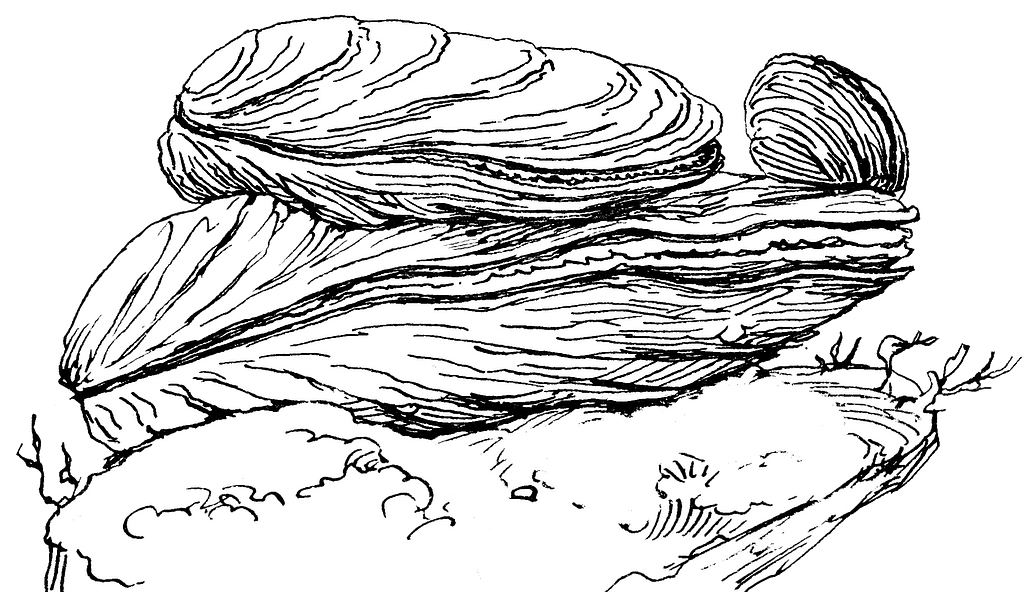
Oyster Reef Ecology
Oyster reefs are a large aggregation of oysters growing on top of one another, forming
vital underwater structures. As we discussed in the previous newsletter, oyster larvae
require a substrate to attach themselves to in order to mature and grow. One common
substrate for oyster larvae is other oysters! This process of oysters attaching
themselves to each other forms oyster reefs: rigid structures that support vital
ecosystems. Similar to their tropical cousins, coral reefs, oyster reefs provide important
habitat for hundreds of aquatic species. On the coasts of Long Island, oyster reefs
provide homes for other mollusks such as mussels and barnacles. Oyster reefs also act
as nurseries for many fish and crab species, providing protection for young organisms
to hide from predators as they grow up. Restoring oyster reefs not only increases oyster
populations, but also enhances biodiversity and supports the overall health of coastal
ecosystems.
If you are familiar with oysters, you know that they play a crucial role as cleansers of
our coastal ecosystems. Oysters are filter feeders, removing algae and phytoplankton
from the water as it’s pumped through their gills. The average adult oyster can pump
up to 50 gallons of water a day. When multiplied by the thousands of oysters inhabiting
an oyster reef, they create a massive filtering system that is constantly cleaning our
waters and improving water quality. Oysters also play a role in removing excess
nitrogen from the water. In excess, nitrogen can lead to eutrophication: algal blooms
that lead to a depletion of oxygen from the water and harm marine life. How do oysters
remove nitrogen for marine ecosystems? Oysters filter out nitrogen, which algae feed
on, and assimilate it into their tissues and shells. Unused nitrogen is deposited into the
surrounding sediment and transformed by microorganisms. The once harmful nitrogen is modified into nitrogen gas, and is released into the atmosphere and removed from
the marine ecosystem. By removing nitrogen from the water, oyster reefs enhance
water quality and help prevent harmful algal blooms. Why does water quality matter?
The cleaner the water, the healthier the ecosystem, the better the environmental
conditions for organisms to thrive. Without oyster reefs, the health of our coastal
ecosystems deteriorates, along with the organisms that depend on them.
Sources
Donnelly, Heather, Ashley Smyth, Shirley Baker, Laura Reynolds, and Angela Collins. 2023. “How Do Oysters Remove Nitrogen? SL498 SS711, 1 2023”. EDIS 2023 (1). Gainesville, FL. https://doi.org/10.32473/edis-ss711-2023.
Museum of the Earth. (n.d.). Conservation paleobiology: Putting the dead to work. Paleontological Research Institution. https://www.museumoftheearth.org/conservation-paleobiology
NOAA Fisheries. (2026, May 19). Oyster reef habitat. U.S. Department of Commerce. https://www.fisheries.noaa.gov/national/habitat-conservation/oyster-reef-habitat.